
Diastasis Recti Treatment In Victoria, British Columbia — Pelvic Floor Rehabilitation That Helps You Take Back Control

Is This Your Experience?
Diastasis recti is one of the most common postpartum conditions — and one of the most frequently overlooked. If any of the following symptoms feel familiar, you are in the right place:
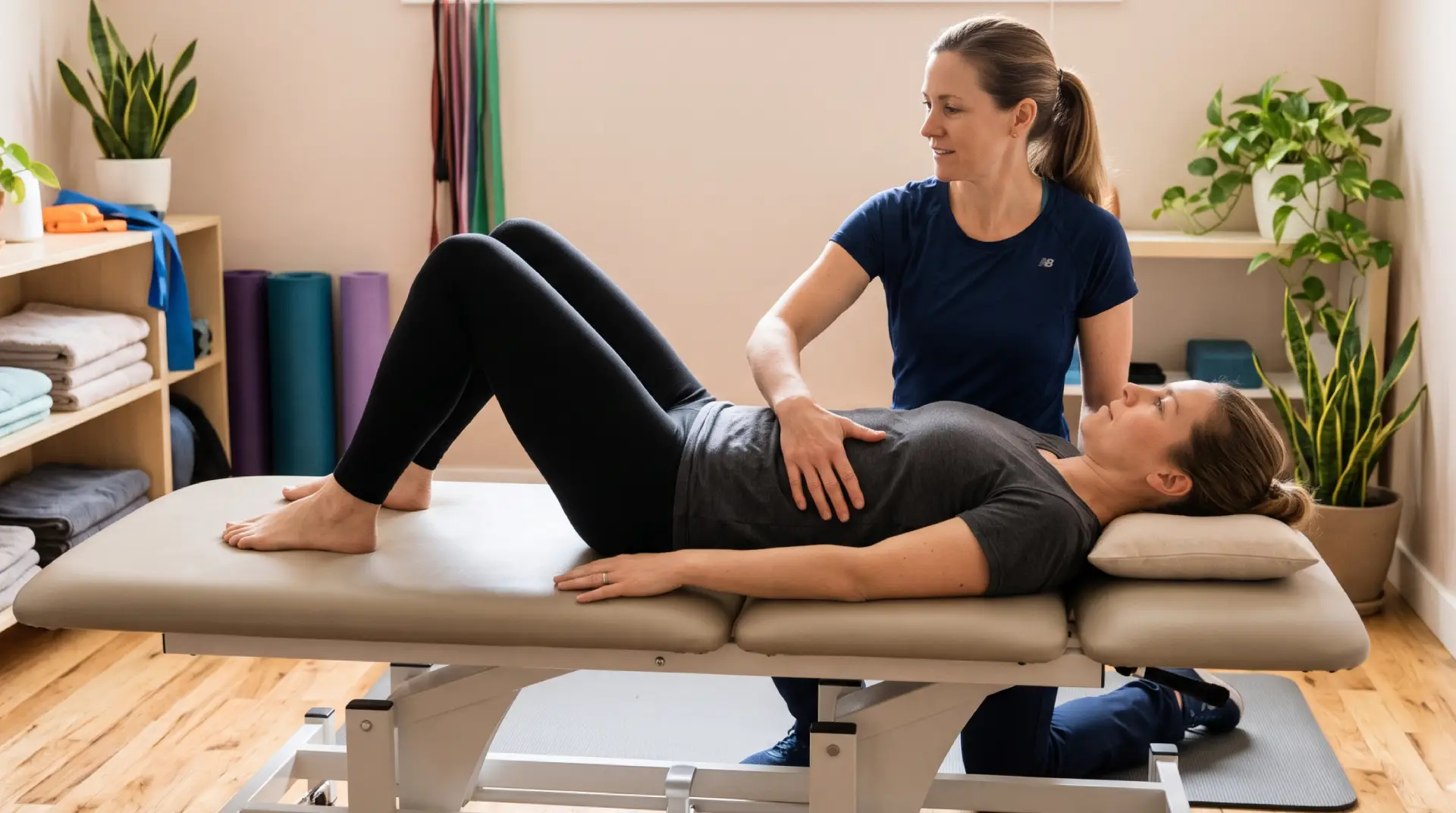
How Does Pelvic Floor Rehabilitation Help With Diastasis Recti?
Pelvic floor rehabilitation works by addressing the entire deep core neuromuscular system — not just the physical gap itself. Your registered physiotherapist retrains the coordinated relationship between your transverse abdominis, diaphragm, and pelvic floor, supporting the tension that the linea alba needs to function well. This differs meaningfully from generic core exercises, which can raise intra-abdominal pressure and may worsen separation rather than support healing.
Sessions teach your body how to breathe, brace, and load correctly — practical skills that transfer directly into everyday life. You will develop diaphragmatic breathing mechanics, deep core activation strategies, and movement patterns that avoid the doming response signalling your system is under strain. Every exercise is selected and progressed specifically for your clinical presentation.
Because diastasis recti rarely exists in isolation, your clinician will also work to address any pelvic floor symptoms — such as leaking, heaviness, or instability — that frequently accompany abdominal separation. Rebuilding your core means supporting the whole system.
What Should You Expect From Your Rehabilitation Journey?
| Stage | What Happens | Timeframe |
|---|---|---|
| Initial Assessment | Your physiotherapist conducts a thorough evaluation of your abdominal separation — measuring gap width and depth — assesses linea alba tension, reviews your breathing mechanics, and performs a specialized pelvic floor assessment to understand the complete picture of your core presentation. Every step is consent-driven and moves at your pace. | First appointment |
| Treatment Sessions | One-on-one sessions focused on active, progressive recovery. You will work through personalized exercises — diaphragmatic breathing, deep core activation, and safe loading progressions — all tailored to your lifestyle, goals, and current physical capacity. No generic programs; each session builds purposefully on the last. | Ongoing, typically weekly or biweekly |
| Timeline | Many patients report meaningful strength and control improvements within 4 to 8 weeks. Connective tissue remodeling and a return to higher-level activity typically takes 3 to 6 months of consistent, guided effort — and every treatment plan is adjusted based on your individual progress. | Individual results vary |
Our Pelvic Floor Rehabilitation At Synergy Health Centre
If you are ready to move beyond general advice and work with a local team that genuinely understands diastasis recti from the inside out, we are here for that next step. At Synergy Health Centre in Victoria, our approach to pelvic floor rehabilitation goes well beyond a set of exercises — it is a personalized, progressive care plan built entirely around your body, your lifestyle, and your functional goals.
Learn more about our pelvic floor physiotherapy service — including how our clinicians approach assessment, what a typical treatment plan looks like, and how we can help you take back control of your core health.
Is Pelvic Floor Rehabilitation Or Surgery Right For Diastasis Recti?
If you are weighing your treatment options, here is an honest look at how different approaches compare — so you can make the informed healthcare decision that fits your specific situation.
| Approach | What It Addresses | What To Consider |
|---|---|---|
| Pelvic Floor Rehabilitation | Deep core neuromuscular function, intra-abdominal pressure management, pelvic floor symptoms, and return to activity | An evidence-based conservative option often used as a first-line approach; addresses the full functional system, not only the physical gap |
| Abdominoplasty (Surgery) | Can physically repair the anatomical gap in the abdominal wall | Focuses on the anatomical gap; functional rehabilitation is often recommended alongside or following surgery to support neuromuscular coordination and pelvic floor symptoms |
| Online Postnatal Programs | General postpartum core guidance; convenient and easily accessible | May not account for your specific linea alba tension or individual compensation patterns; individualized guidance helps you progress appropriately |
| General Core Exercise / Chiropractic Co-Management | May maintain general fitness or address secondary joint pain | Standard exercises like crunches may increase intra-abdominal pressure without proper pelvic floor guidance; approaches can complement one another |
No single approach fits every situation. Your physiotherapist can help you understand your baseline and determine which clinical pathway makes the most sense for your goals.
Why Patients In Victoria Choose Synergy Health Centre
Diastasis recti responds well to targeted, individualized care — and that is the only kind we offer. Here is what you can expect when you work with our clinical team:
Frequently Asked Questions About Diastasis Recti And Pelvic Floor Rehabilitation
Reach out if you can’t find what you’re looking for.
Insurance And Direct Billing At Synergy Health Centre
Pelvic floor rehabilitation is delivered by our registered physiotherapists, which means it is typically covered under the physiotherapy benefit of most extended health plans in British Columbia. Synergy Health Centre offers direct billing to most major insurance providers, allowing you to access the care you need without upfront paperwork. We recommend contacting our Victoria clinic to verify your specific coverage before your first appointment.
Serving Victoria And The Surrounding Communities
Synergy Health Centre proudly serves patients throughout Greater Victoria, including Saanich, Oak Bay, Langford, Colwood, Esquimalt, and View Royal. Whether you are located in the heart of the city or commuting from a surrounding Vancouver Island neighbourhood, our dedicated clinical team is here to help you take back control of your core health.
Ready To Take Back Control Of Your Core?
You do not have to keep modifying workouts, managing ongoing discomfort, or wondering whether your core will ever feel strong again. Same-day appointments are available at Synergy Health Centre in Victoria, British Columbia.
